

The Technology Stack Powering Blockchain Privacy in 2026
Explore blockchain's privacy evolution from Bitcoin to 2026, as the industry shifts from anonymity to compliance.
For a while, the majority of blockchain networks have operated like a 'glass house', where every transaction on them has always been fully visible. To many of these networks, privacy has often been viewed as optional or a nice-to-have feature.

But as more of the world's finance comes on-chain, privacy is no longer an option; it is a requirement. To meet this requirement, the last few years have been characterised by several improvements in blockchain.
We have witnessed zero-knowledge proofs (ZK) move from theory into production, regulators make selective privacy more important than full transparency, and technology milestones across several chains.
Fast forward to 2026 and privacy is still growing. This article traces the history of privacy in blockchain, its evolution from the days of regulatory scrutiny to compliance, and where it is heading in 2026 and beyond.
 Hans
Hans
The History of Privacy in Blockchain
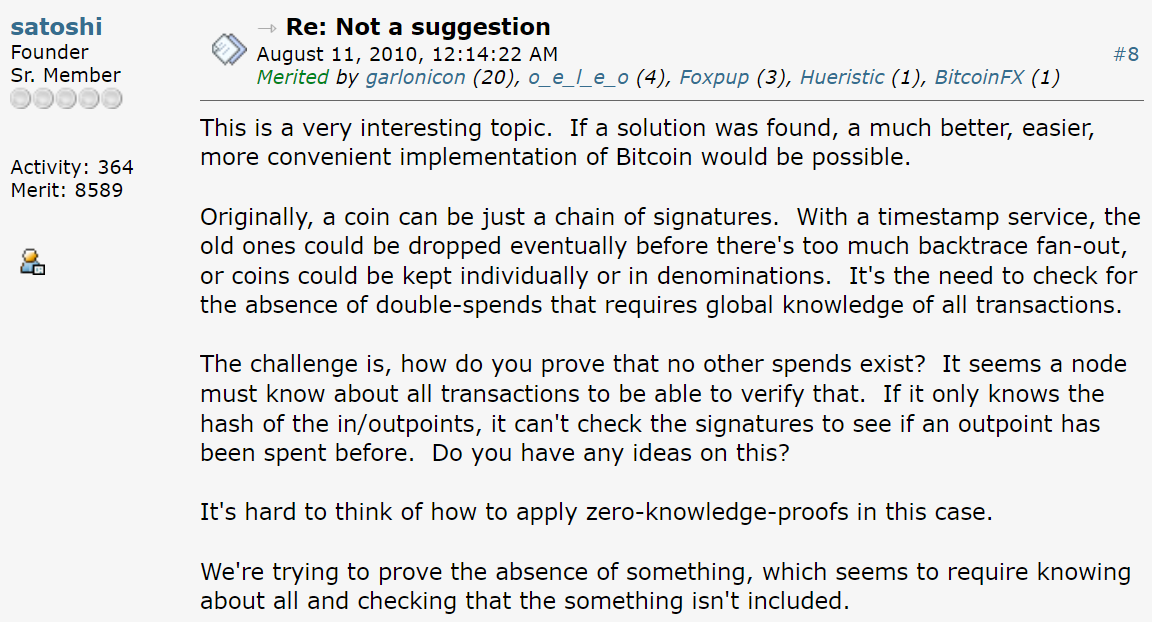
The issue of privacy in blockchain is not new; it dates as far back as the early days of Bitcoin. As we know, the Bitcoin base layer operates as an open and transparent network. But that does not mean privacy was not desired in the network.
Early Bitcoin developers, including pseudonymous creator(s) Satoshi Nakamoto, explored ideas for making transactions more private or even shielded. But at that time, practical zero-knowledge technology was not widely available or ready for deployment.
This 'privacy' limitation continued in blockchain until 2014, when Monero launched the first privacy coin, later followed by ZCash in 2016 and many others afterwards. These coins kept transaction details hidden, making it hard for anyone to see or follow one's blockchain activity.
 Hans
Hans
Then came mixers (also called tumblers), which pool transactions from multiple users and shuffle them in different amounts before sending them to new addresses, a way to break the link between a sender and a receiver. With these solutions, crypto users were now presented with the opportunity to transact with on-chain privacy and anonymity.
 Hans
Hans
For context, anonymity is different from privacy: privacy is the ability to hide what you are doing, while anonymity is the ability to hide who you are. However, things did not play out very well for these early privacy platforms and those that followed. The majority of them were weighed down heavily by regulators due to their increased usage for money laundering and evasion of taxation.
As a result, the years that followed saw the majority of privacy coins delisted from several exchanges, while some mixers were given government sanctions and the founders were penalised.
Also, if we are being honest, although these early privacy platforms succeeded in showing that privacy was achievable in blockchain, basic transactions or simply privacy alone was not enough.
Users want and perhaps need more, such as programmability, which would give them more use cases to transact.
From Anonymity to Compliant Privacy
Post-2023, privacy in blockchain took another approach, where the aim was not about anonymity anymore but about functionality, with compliance in mind.
Under this new era, privacy is built along three main pathways
- Optional privacy, which reserves compliance interfaces for institutions and exchanges.
- Auditable privacy, which enables selective disclosure through zero-knowledge proofs or view keys.
- Rule-level compliance, which involves embedding regulatory logic directly into the protocol layer to prove compliance with rules without revealing full transaction details.
With this, the new generation of privacy applications has now moved from being just a hype of coins to an institutionally driven sector, characterised by new blockchain privacy startups that aim to tap the world's finance. This means that existing blockchains also announced major initiatives to bring privacy to their networks.
For instance, in 2025 the Ethereum Foundation assembled a team of 47 specialists to enhance the privacy of the network's base layer.
THE WORD IS OUT!
— Privacy Pools (@0xprivacypools) November 16, 2025
huge congrats to @ethereumfndn, @VitalikButerin, @kassandraETH for demoing the Kohaku wallet.
onchain privacy is entering a new stage, and we’re honoured to be a part of it.
privacy, by default, right in the comfort of your wallet.
Ethereum is for privacy. pic.twitter.com/DisRovcNBu
A core message that on-chain privacy is a priority!
Regulators Weighing In
The transition from raw anonymity to compliant privacy reflects deliberate policy evolution. Last year, 2025, regulatory clarity had really improved in key jurisdictions, where outright opposition pivoted towards an acceptance of privacy models that allow compliance, of course.
For instance, in the United States, clearer rules for digital asset banks acknowledged the role of privacy technology as a mechanism to satisfy AML while maintaining confidentiality. Europe's MiCA, on the other hand, endorses 'data-minimised' approaches for consumer protection where zero-knowledge proofs align well."
 Hans
Hans
A notable incident of this shift occurred when the U.S. Department of the Treasury reversed an earlier sanction against the crypto mixer Tornado Cash, after a court decided the way the sanction was applied exceeded the specific law's authority.
As well as relistings of previously delisted privacy coins. From all this, it is now quite clear that privacy could be allowed with the industry growing.
The 2026 Privacy Trends
Now that privacy has clicked into place to the point of recognition by regulators, 2026 could be seen as the year where privacy becomes a feature. We take a look at four key technologies that could play a part:
Zero Knowledge
As we know, zero-knowledge is a cryptographic approach that enables one party to prove the validity of information without revealing the underlying data itself. For a while, ZK technology has been used across several privacy projects, through approaches like zkSNARKs in ZCash, among others.
 Fred
Fred
A major step happened in 2025 with the rise of Zero-Knowledge Virtual Machines (zkVMs), which allow developers to build private applications using standard programming languages. Fast forward to 2026, and several zkVMs are live or in testnet, supporting use cases such as private DEX trades, confidential governance, and KYC-verifiable transactions on Ethereum, for example.
 Ethereum Foundation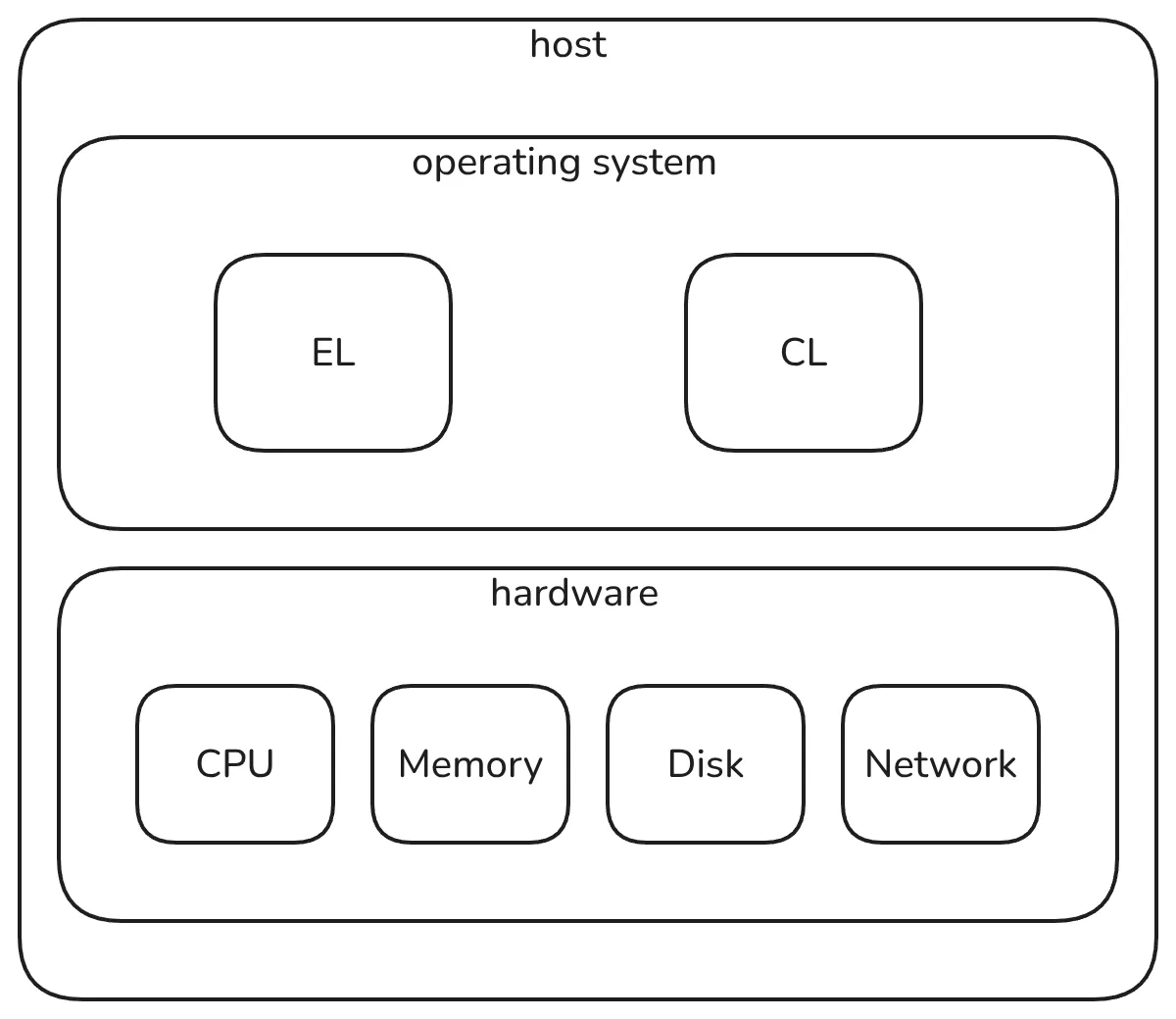
Multi-Party Computation (MPC)
As the name suggests, Multi-Party Computation allows multiple parties to jointly perform a computation without revealing their private inputs to one another. Within blockchain, its main use is threshold signature wallets, where private keys are split across parties to remove single points of failure. As a result, this model dominates institutional custody and is often combined with technologies like zero-knowledge proofs to form an extra layer of privacy.
Fully Homomorphic Encryption (FHE)
Thirdly, FHE allows computation directly on encrypted data, meaning nodes can execute logic without seeing the underlying values. For context, unlike zero-knowledge proofs, which verify correctness without revealing data, FHE enables the computation itself to remain private. In theory, this means an entire DeFi logic, such as lending and liquidation, can run entirely on encrypted data, with nodes having no idea what they are actually computing.
Think of FHE as the 'HTTPS for blockchains'. However, this technology remains computationally expensive, with performance still orders of magnitude slower than plaintext. But 2026 is the year that is expected to focus on performance optimisation.
In the broad context of privacy technology, 2026 could also witness continued growth of hybrid projects which combine at least two or all of the above technologies to balance trade-offs. A trend that already began in 2025 and is still alive in 2026.
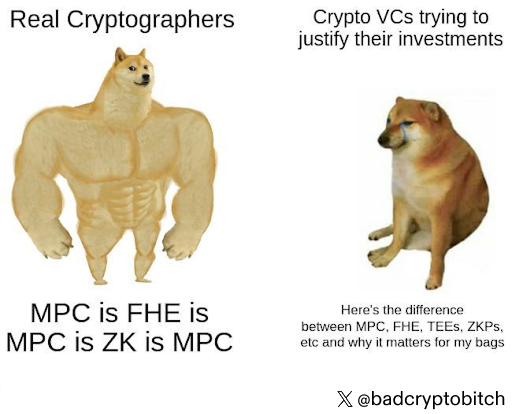
All in all, as these technologies advance and integrate and morph into each other, privacy is headed everywhere: through wallets, Layer 2s, and cross-chain systems.
Where Does Bitcoin Stand?
Although Bitcoin's privacy is broken at the base layer, that does not mean privacy has not matured around it. As of 2026, Bitcoin's base layer remains transparent by design, but privacy has improved through wallet techniques, Layer-2 protocols, and emerging cryptographic protocols.
For instance, the 2021 Taproot upgrade and MuSig2 allow for key aggregation, which makes multi-signature transactions appear similar to simple payments, making it harder for third parties to identify them. Bitcoin privacy today also comes from external protocols implemented in wallets.
Examples include PayJoin, which lets both the sender and the receiver contribute inputs to the same transaction to make it look ambiguous. In reality, Bitcoin's privacy contrasts in a bigger way with that of privacy-focused chains or zero-knowledge networks. Although it has become more privacy-aware, privacy remains optional and dependent on careful use rather than being inbuilt.
Private Conclusion
As 2026 is just getting started, privacy is increasingly seeing more adoption. Therefore, for any chain, these are not signs to ignore. In the coming days, it is quite clear that privacy will be a feature not an optionality.
Connect with Bitfinity Network
Bitfinity Wallet | Bitfinity Network | Twitter | Telegram | Discord | Github
*Important Disclaimer: The information provided on this website is for general informational purposes only and should not be considered financial or investment advice. While we strive for accuracy, Bitfinity makes no representations or warranties regarding the completeness, accuracy, or reliability of the content and is not responsible for any errors or omissions, or for any outcomes resulting from the use of this information. The content may include opinions and forward-looking statements that involve risks and uncertainties, and any reliance on this information is at your own risk.
External links are provided for convenience, and we recommend verifying information before taking any action. Bitfinity is not liable for any direct or indirect losses or damages arising from the use of this information.



Comments ()