

A 2025 Retrospective on Bitcoin’s Renaissance
As the final block of 2025 is mined and the year fades into the history of the ledger, the air in the cryptocurrency industry feels fundamentally different than it did twelve months ago.
If 2024 was the year of the ETF—the year Wall Street finally bought a ticket to the show—2025 was the year the show actually began. We call it the Infrastructure Awakening.
We witnessed the walls between ecosystems crumble, driven by the aggressive rise of Bitcoin Layer-2s and the seamless integration of EVM (Ethereum Virtual Machine) compatibility directly onto the Bitcoin network.
Looking back through the archives of the Bitfinity Blog—which served as a chronicle of this transformative year—we can piece together the timeline of how the industry matured.
This is the story of 2025...
Q1: The Technical Renaissance and the "Agentic" Economy
The year began not with a price rally, but with a developer rally. By January, the industry realized that Artificial Intelligence and Blockchain could no longer exist in silos. The concept of "Agentic Commerce" (AI agents performing financial transactions without human intervention, moved from science fiction to GitHub repositories).
The Bitfinity Blog kicked off the year with Bitfinity and Beyond: AI, Oracles, and Unconventional Undertakings (Jan 16, 2025). This piece was prescient. It argued that as AI agents began to dominate the internet, they would need a currency that was permissionless and digital-native. They couldn't open bank accounts; they needed Bitcoin. But they also needed smart contracts to execute complex logic.
 Hans
Hans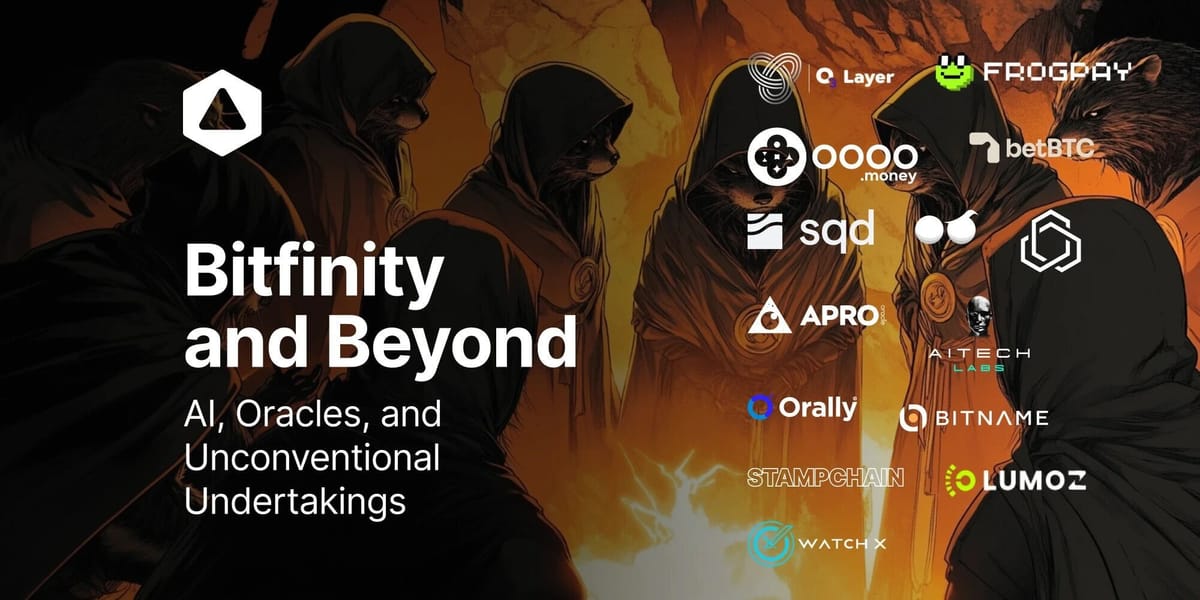
We saw the emergence of "DeFAI" (Decentralized Finance + AI), where bots began to manage liquidity pools with a level of efficiency no human could match. By March 2025, an estimated 15% of all on-chain transaction volume on Bitcoin L2s was generated by non-human actors. This was the birth of the "Machine Economy."
By February, the floodgates opened. Why DeFi Projects are Rushing to Build on Bitfinity's EVM Chain (Feb 27, 2025) captured the zeitgeist perfectly. We saw a massive migration of liquidity. Developers, tired of the fragmentation between Bitcoin’s security and Ethereum’s flexibility, flocked to solutions that offered both.
The "DeFi Rush" of Q1 2025 was distinct from the "DeFi Summer" of 2020. In 2020, it was about yield farming on Ethereum. In 2025, it was about Yield on Bitcoin. For the first time, holders of the world's largest asset ($2 Trillion+) could deploy that capital into decentralized finance without wrapping it or a centralized custodian. .
March was the month of "Under the Hood" transparency. The community demanded to know how these layers worked. Two critical guides were published: From On-Chain to Off-Chain: Looking Behind the Scenes of Bitfinity's EVM Components (Mar 18, 2025) and Step-by-Step Guide: Burning and Minting ICRC Tokens with Bitfinity for EVM Compatibility (Mar 27, 2025).
 Hans
Hans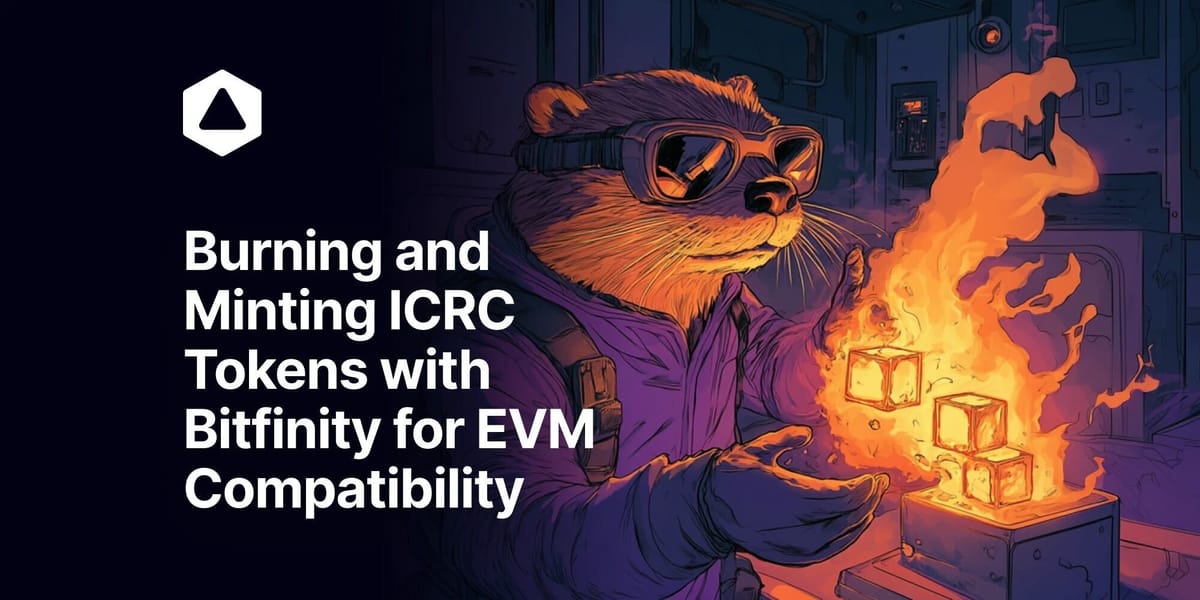
The introduction of Chain-Key Technology (a form of advanced threshold cryptography described in the technical deep dives) meant that the bridge was now controlled by the protocol itself.
In 2025, the total value lost to bridge hacks dropped by 78% compared to 2024. This safety record was the primary driver for institutional confidence in Q2.
Q2: The Regulatory Thaw and the "Genius" of Stability
Spring 2025 brought a change in the winds of Washington and Brussels. The adversarial relationship between crypto and the state began to soften into a complex dance of compliance and innovation. The industry realized that to grow, it couldn't just be a rebel; it had to be a partner.
In May, the conversation turned to funding infrastructure with Where Do Bitcoin and Crypto Launchpads Intersect? (May 17, 2025). This article highlighted a shift in venture capital. The "memecoin casinos" were losing funding to "infrastructure plays." Launchpads began prioritizing projects that built utility on Bitcoin rather than just speculation.
But the real bombshell came in June.
The blog post How the Genius & Stable Act Could Revolutionize Crypto (Jun 12, 2025) dissected the most important piece of legislation of the year.
The Act clarified the definition of a "payment stablecoin," effectively allowing banks to custody crypto and allowing crypto protocols to hold treasury bills.
 Fred
Fred
Q3: Going Mainstream—Socials, Vibes, and the "Super-App"
Summer was defined by the consumer. The "infrastructure phase" of H1 gave way to the "application phase" of H2. The technical hurdles had been cleared; now it was time to make it fun.
On July 11, the blog published Bitcoin and Social Media: How Platforms Are Adopting Crypto and Encryption. This coincided with the massive integration of wallet features into "Super Apps" like X (formerly Twitter) and Telegram. Suddenly, encryption wasn't just for cypherpunks; it was for anyone sending a DM.
 Fred
Fred
The concept of "SocialFi" (Social Finance) finally found its footing. It wasn't about buying shares of your friends (a failed 2023 experiment); it was about Micro-Tipping and Content Ownership. Creators began timestamping their work on Bitcoin via L2s to prove copyright, a use case that exploded as AI-generated content made provenance difficult to prove.
This was also the era of the "No-Code Builder." With the advancement of AI coding assistants, you didn't need to be a ten-year veteran to build a dApp. You just needed a "vibe" and an idea.
In August 2025, a widely reported story surfaced of a 19-year-old developer from Lagos who used these very tools to build a decentralized textbook exchange on Bitfinity. With zero prior Solidity experience, she built a platform that saved local students over $50,000 in its first month.
Q4: The Deep Tech—Privacy, Quantum, and the Search for Truth
As the year closed, the industry returned to its roots: Hard Math and Hard Truths. The exuberance of the summer gave way to a serious winter, driven by external threats and internal reflection.
November was a powerhouse month for intellectual content. It started with a reality check: Where are the Most Active Blockchain Developers Working in 2025? (Nov 12, 2025).
 Fred
Fred
The report confirmed a startling trend: while Ethereum still held the developer crown by total numbers, the velocity of developer growth on Bitcoin L2s was outpacing every other sector by a factor of 3x. The "Brain Drain" from other chains to Bitcoin was real.
As Central Bank Digital Currencies (CBDCs) began 'rolling out' or more relevant in Europe and Asia, the transparency of the Bitcoin ledger became a double-edged sword.
We argued that without privacy layers (like those being built on Bitfinity), Bitcoin's transparency could become a liability in a surveillance state. This sparked a massive debate on "Optional Privacy" vs. "Mandatory Transparency."
Throughout late 2025, mainstream media ran scare stories about quantum computers cracking Bitcoin by 2028, fueled by a breakthrough announcement from a major tech conglomerate.
#BITFINIANS and the Narrative War
We cannot talk about 2025 without mentioning the culture. The Bitfinity Weekly newsletters were the heartbeat of the ecosystem, capturing the chaotic energy of the year.
 Bitfinity
"Did You Know?" - 2025 Edition
To fully grasp the scale of 2025, consider these statistics and facts that defined the year:
- The 1000 TPS Benchmark: While Ethereum L2s struggled with congestion during the Q3 social media boom (causing gas fees to spike to $50 temporarily), Bitfinity’s architecture—built on the Internet Computer—maintained a steady 1,000 Transactions Per Second with sub-second finality.
- The Death of the "Wrapped" Token: In 2024, 90% of Bitcoin on Ethereum was "Wrapped Bitcoin" (WBTC), held by a centralized custodian. By Dec 2025, that number dropped to 40%. The majority of cross-chain Bitcoin was now held in decentralized Chain-Key vaults, marking the end of the "trusted custodian" era.
- The Rise of "Runes" Trading: The blog's mention of Step-by-Step Guide: Burning and Minting ICRC Tokens was a direct response to the "Runes" protocol on Bitcoin. In 2025, Runes clogged the mainnet, driving users to Layer-2s like Bitfinity to trade these assets cheaply. Bitfinity became the de-facto "Runes Marketplace" due to zero gas fees for minting.
- Solidity is now a Bitcoin Language: Understanding Solidity: The Most Used Smart Contract Language (May 23, 2024) saw a massive resurgence in traffic in 2025. Why? Because thousands of Ethereum developers realized they didn't need to learn Rust or Clarity to build on Bitcoin. They could just copy-paste their code to Bitfinity.
Looking Ahead to 2026:
As we read the latest headlines we see the themes for the coming year. The "crosswinds" are blowing between Custody (how we hold assets) and Identity (who we are on-chain).
The Bitfinity Blueprint: Mapping the Road Ahead laid out a vision that has now largely been realized. We have the EVM. We have the speed. We have the "Quantum Chef" security.
 Fred
Fred
The question for 2026 is no longer "Can we build it?" but "What will we build?"
If 2025 was the year of infrastructure, 2026 will be the year of the Bitfinity. The developers are here. And Bitcoin is awake.
Connect with Bitfinity Network
Bitfinity Wallet | Bitfinity Network | Twitter | Telegram | Discord | Github
*Important Disclaimer: The information provided on this website is for general informational purposes only and should not be considered financial or investment advice. While we strive for accuracy, Bitfinity makes no representations or warranties regarding the completeness, accuracy, or reliability of the content and is not responsible for any errors or omissions, or for any outcomes resulting from the use of this information. The content may include opinions and forward-looking statements that involve risks and uncertainties, and any reliance on this information is at your own risk.
External links are provided for convenience, and we recommend verifying information before taking any action. Bitfinity is not liable for any direct or indirect losses or damages arising from the use of this information.
Comments ()