

Vibe Coding Tools for Web3: The Complete Guide for Non-Developers
Discover how vibe coding is changing Web3 in 2026. Learn which AI tools to use, how to build your first crypto app on Bitfinity, and what risks to avoid.
Building in Web3 used to be an exclusive club reserved for people who could code. If you had an idea for a crypto app, you either spent months learning how to code or paid a developer to do it for you. But this is no longer the story.
In February 2026, Anthropic's 'Built with Opus 4.6: Claude Code Hackathon', once considered an event only for developers, delivered unusual results.
A lawyer took first place, while a cardiologist and a musician also ranked among the top builders. None of them were professional developers; their success came from AI systems. Instead of writing code line by line, they just described their idea and AI did the rest.
Vibing + Coding = VibeCoding
Vibe coding is the practice of using AI to build software by describing ideas in plain language. Instead of writing code directly, you just describe what you want created, and AI systems determine the best way to build it.
To understand this concept, let us first look at the mechanisms of traditional coding, which is the most familiar form of coding. In traditional coding, you as a developer are required to write, test, and debug each line of code yourself.
Its workflow can be simplified like this: human → code → software.
Vibe coding flips that workflow. Instead of writing every line of code, it allows you to describe what you want, and AI generates the implementation, tests, and fixes mistakes along the way.
The workflow looks like this: human idea → prompt → AI → software.
For example, with a prompt like: 'Create a crypto portfolio dashboard with wallet login and token analytics,' AI tools can build the user interface, backend setup, and data structure needed for the app. All you have to do is the final review and adjustments.
This idea was introduced and popularized by AI researcher and founding member of OpenAI Andrej Karpathy in early 2025, which he termed
'a kind of coding where you fully give in to the vibes'.
For this 'simplicity,' vibe coding has attracted many people, especially those looking to build in crypto.
If you are one of them or you have just developed that desire now, worry less because in the next section we will guide you on some of the tools you can use to vibe code...
There's a new kind of coding I call "vibe coding", where you fully give in to the vibes, embrace exponentials, and forget that the code even exists. It's possible because the LLMs (e.g. Cursor Composer w Sonnet) are getting too good. Also I just talk to Composer with SuperWhisper…
— Andrej Karpathy (@karpathy) February 2, 2025
Tools to Use for Crypto Vibe Coding
There are already a huge (and growing) number of vibe coding tools and platforms. However, they vary based on where they live, how they interact with your code, and who they are built for.
For this reason, we will classify the most common ones based on what they are best for:
Chat-Based Tools
Given that vibe coding relies on AI to generate software, most modern large language models (LLMs) can be used as a starting point. Most of them have code knowledge and can assist. This is already common knowledge at this point.
Therefore, if you are looking to perform such tasks, you can start with the most popular LLMs you are probably familiar with, such as ChatGPT, Claude, and others.
 Hans
Hans
You can also use these models together with code editors to plan architecture, debug smart contracts, and generate boilerplate across different blockchains.
Integrated Tools
Unlike chat-based tools, which are mostly accessed through a website, these tools are integrated with an IDE (Integrated Development Environment).
An IDE is a software application that provides a set of tools in one interface to help developers write, test, and debug code.
Integrated tools are suitable if you are working on larger and more complex crypto projects, such as building smart contracts, developing DeFi protocols, or designing full-stack dApps.
They may also require some basic familiarity with how to use an IDE. The most popular ones to choose from are:
Claude Code
This is a variant of Anthropic's Claude chatbot named Claude Code, which is specifically optimized for coding. It is one of the most advanced vibe coding tools out there and has been welcomed by many as THE application to create, write, debug, and refactor code.
Nicholas Carlini, one of the most respected security researchers alive, just demoed Claude finding zero-day vulnerabilities live on stage. read that again.
— sui ☄️ (@birdabo) March 29, 2026
it was not on a test project but on Ghost CMS, one of the most popular open-source projects on github. a codebase that… pic.twitter.com/olfAFEcSHB
To get some AI skills to code with Claude Code in crypto, check out this repo on GitHub. ⏬
 ancoleman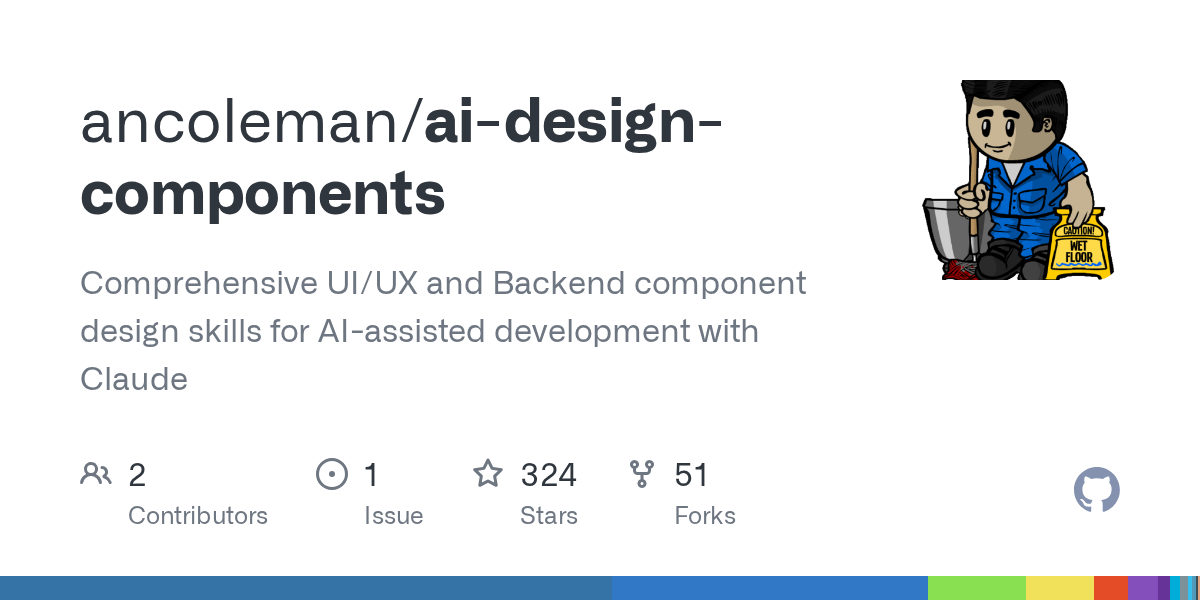
Cursor
Cursor is an AI-native code editor built on VS Code that integrates LLMs directly into the coding environment. It excels at generating, debugging, and refactoring large codebases.
This tool also allows you to import your existing context and libraries like ethers.js, is priced at $20/month per user.
GitHub Copilot
GitHub Copilot is an AI-powered coding assistant developed by GitHub and OpenAI. It acts as a 'pair programmer,' meaning it collaborates with you in real time, suggesting and improving code while you stay in control.

Replit
Unlike the other first three tools, which require either installation or configuration, Replit is a browser-based IDE. It features an AI agent that allows you to build, deploy, and host applications.
In addition, it supports multiplayer coding with integrated hosting, making it ideal for distributed team coding.
 replit
Application Builders
If you're looking to vibe code crypto applications, then the tools in this section offer a more complete environment. They handle both frontend and backend tasks, making it easier to create dApps, dashboards, and other Web3 interfaces.
Bolt.new
Bolt.new is a browser-based development environment that generates full-stack web applications from natural language prompts. It runs entirely in the browser, meaning no local setup is required.
It can build frontend (React, Tailwind), backend (Node.js), and database integrations, with instant deployment to a live URL. If you're looking to create crypto dashboards, dApp frontends, or NFT minting pages, this is one that may be well-suited for you.

Lovable
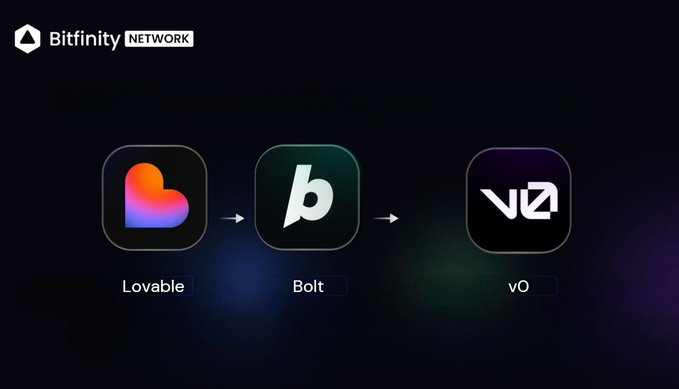
Lovable also generates full-stack web applications and runs in the browser. One of its key capabilities is that it integrates with tools like Supabase for backend services and GitHub for version control.
You can use it to build responsive frontend interfaces, handle authentication, and manage basic database logic.
More Vibe Coding Apps...
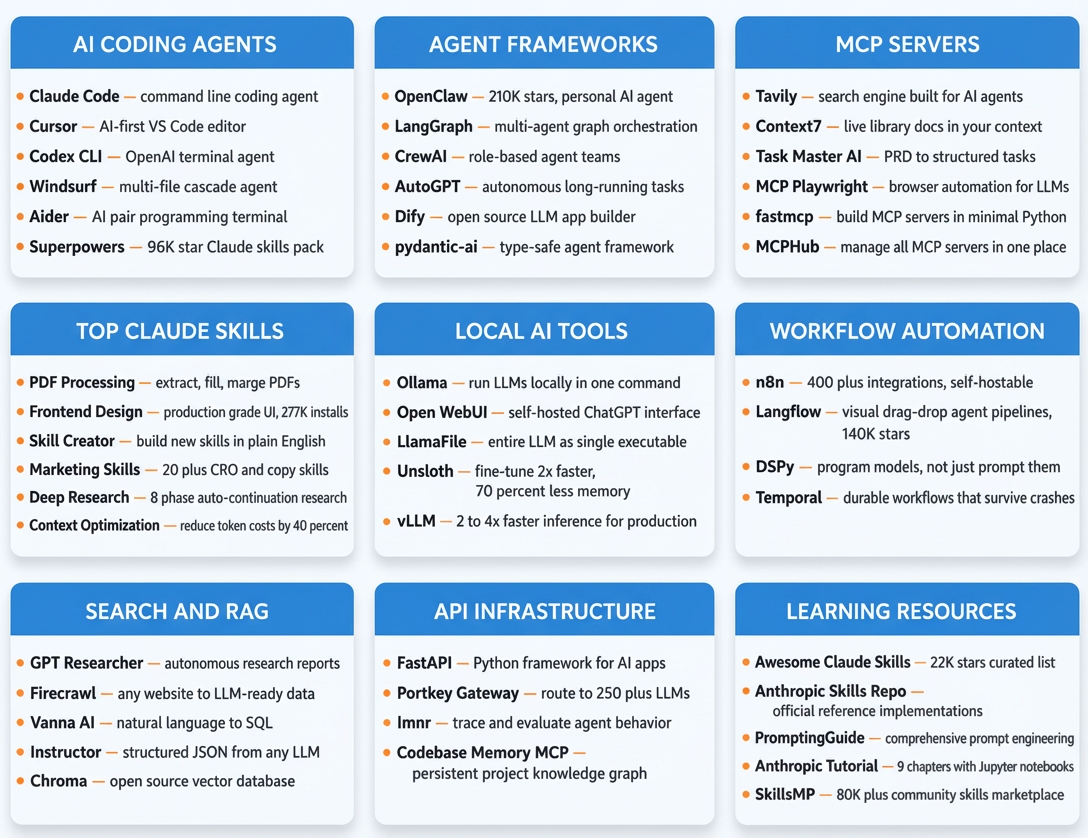
The number of tools you can use for crypto vibe coding is vast and cannot be covered in a single article, but with the above cheatsheet, you can choose the one that best suits you and begin building.
That said, let us now look at the process you will follow.
How to Vibe Code Your First Crypto App on Bitfinity
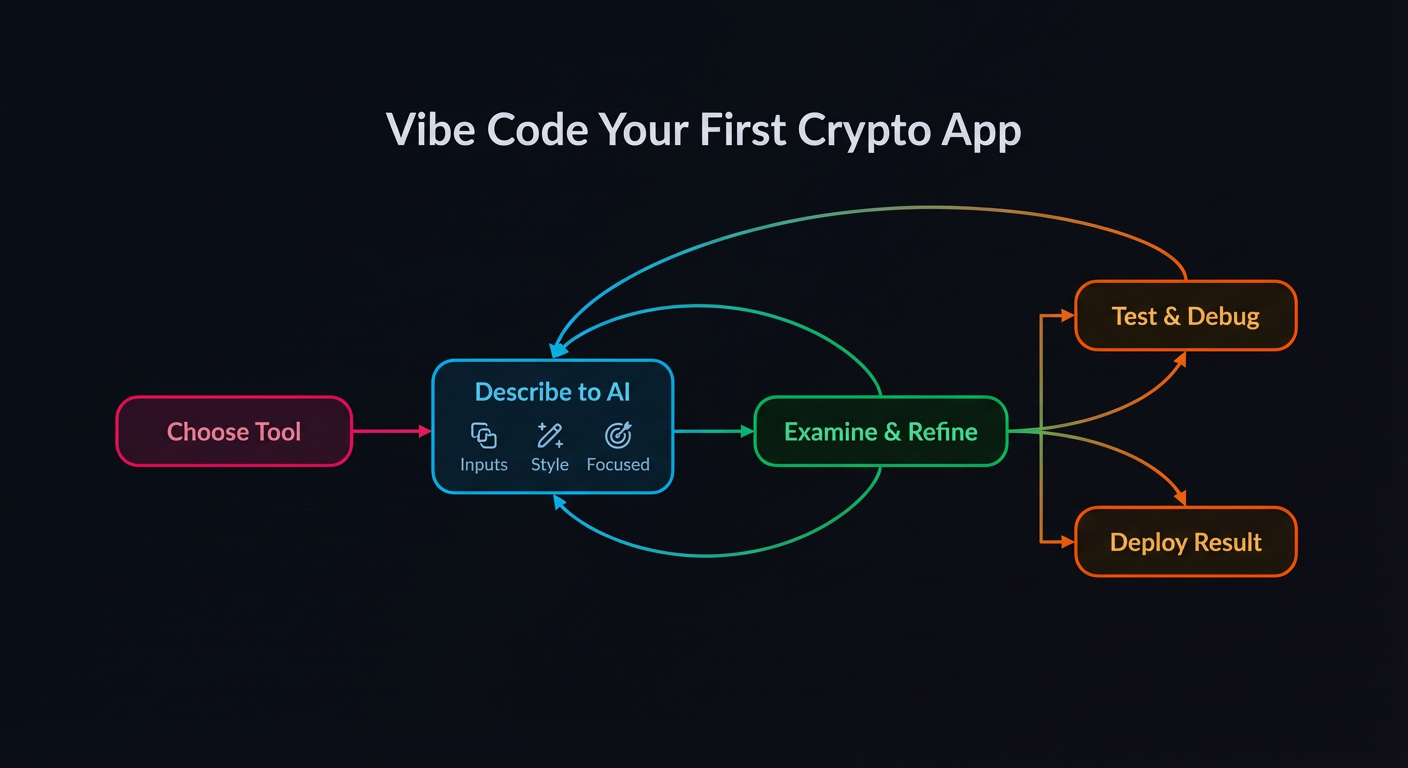
Although the tools vary, the process of vibe coding is structured and works across many of them. Bitfinity is an ideal platform for your first vibe-coded project, it's a high-speed Bitcoin sidechain that's fully EVM compatible, meaning you can build on the Bitcoin ecosystem using Solidity and all the AI tools mentioned above.


Before you begin, clearly define what your application will do. Who is it for? What problem does it solve?
Step 1: Choose a tool that best fits your project
Look for a tool that works with your preferred stack, setup, and expertise. Check if it needs installation or configuration with any of your APIs or existing projects.
Start with a general-purpose tool like Claude to brainstorm features, outline your architecture, and generate initial code snippets.
Step 2: Describe what you want to build
Tell the AI what you want in plain language. You'll get the best code when you craft quality prompts and provide good context. Mention inputs, outputs, or constraints; include visual or style preferences; and keep prompts short and focused.
For your front end, use a UI-focused tool and prompt it with something like:
"Create a clean dashboard for a decentralized finance app with a section to display wallet balance, a list of recent transactions, and buttons for 'Stake' and 'Unstake.'"
For your smart contract, be specific:
"Generate a secure ERC-721 smart contract in Solidity for a digital art collection. Include functions for minting new tokens, transferring ownership, and a function that allows only the contract owner to withdraw funds."
Step 3: Examine and refine the output
Once the AI generates output, treat it like a rough draft. Refine and adapt as you go, and prompt for tests to help validate the results.
For instance, you could ask the AI to "make the dashboard charts bigger" or "add a date filter." This conversational loop should continue until the application matches your requirements.
Step 4: Test, debug, and deploy
Vibe debug by feeding runtime errors or test failures back to the AI, which resolves them. The first version of your code will likely have bugs, when you get an error message, simply copy and paste it back into the AI and ask it to fix the issue.
Once satisfied, deploy the result. Depending on the tool, this might mean pushing to a repository, or with tools like Bolt.new, your app can be instantly previewed and go live with just a few steps.
NOTE: AI builds a basic, well-structured app with working UI and logic, but leaves advanced features (like real wallet connections and secrets) for you to complete. Which is where the risk comes in, if you don't know what you are doing.
Are There Risks Associated With Vibe Coding?
Short answer, yes! Although it reduces initial costs by skipping heavy upfront planning and documentation, there are some risks beneath this convenience.
Recent security research reveals that one in three AI-generated code contains vulnerabilities that attackers can exploit! In crypto, using such codes without human audits is financial suicide.
For instance, in February 2026, the Moonwell DeFi protocol lost $1.78 million in a single day after the AI oracle they had vibe-coded using Claude Opus mispriced a $2,200 asset at $1.12, allowing trading bots to liquidate users.
In addition, using AI in coding raises ethical concerns about job displacement and the devaluation of human expertise, which is for another time.
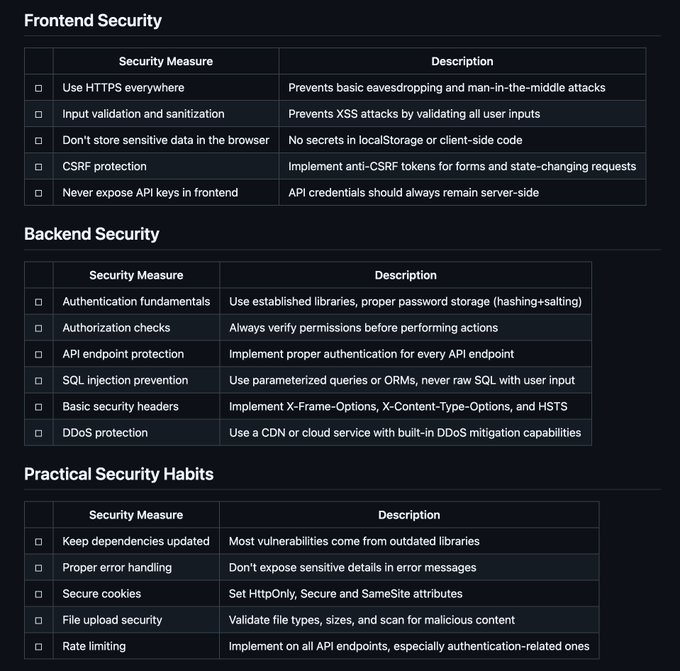
However, to mitigate such risks, you can adopt practices such as familiarizing yourself with basic coding skills to help you make necessary adjustments and following a procedure to keep all your projects secure.
What is the Next Phase of Vibe Coding?
Vibe coding is likely to move beyond simple prompting to autonomous on-chain agents. Instead of prompting step-by-step, developers may assign tasks to AI agents, which then write, test, and debug code while being supervised.
This shift is being described with different terms, including 'agentic coding' and 'agentic engineering'.
Regardless of the name, the direction is clear. Soon, AI agents will build, deploy, and operate crypto applications, and even transact with each other on-chain. Early features like agent modes in existing tools show us exactly where this process is heading.
Connect with Bitfinity Network
Bitfinity Wallet | Bitfinity Network | Twitter | Telegram | Discord | Github
*Important Disclaimer: The information provided on this website is for general informational purposes only and should not be considered financial or investment advice. While we strive for accuracy, Bitfinity makes no representations or warranties regarding the completeness, accuracy, or reliability of the content and is not responsible for any errors or omissions, or for any outcomes resulting from the use of this information. The content may include opinions and forward-looking statements that involve risks and uncertainties, and any reliance on this information is at your own risk.
External links are provided for convenience, and we recommend verifying information before taking any action. Bitfinity is not liable for any direct or indirect losses or damages arising from the use of this information.

Comments ()