

Bitfinity Weekly : Operational Crypto
Welcome to Issue #184 of Bitfinity Weekly for our #BITFINIANS community. If this newsletter was forwarded to you, sign up here.
What's in Today's Email?
- Bitcoin Bytes
- Global Crypto News
- In the IC
- Tweet of the Week
- This Week in our Blog
- Meme Time
- A Matter of Opinion
Bitcoin Bytes
- Custody Controls : A major operational error at South Korean exchange Bithumb briefly credited large amounts of Bitcoin to user accounts before funds were recovered and trading halted. The incident highlighted operational risk and the importance of internal safeguards in Bitcoin custody systems.
- Genesis Tribute : A mysterious ~2.5 BTC transaction was sent to Bitcoin’s Genesis wallet linked to Satoshi Nakamoto, permanently locking the coins since the address has never spent funds. triggered speculation online—ranging from a symbolic tribute or intentional “burn” to theories about Satoshi’s activity.
- Sovereign Hashrate : The United Arab Emirates has been reported to expand state-backed mining activity and now holds a material Bitcoin position via mining, an example of governments exploring on-chain exposure through infrastructure rather than open-market purchases. That approach signals growing sovereign interest in Bitcoin as an infrastructure and reserve asset.
- Difficulty Recalibrates : Bitcoin mining difficulty dropped by roughly 11% in early February, the largest downward adjustment since 2021. The change followed a sustained decline in hashrate and automatically recalibrated the network to keep block production stable.
Global Crypto News
- Sanctions Expand : European policymakers are considering broader restrictions on crypto activity linked to sanctioned entities as part of a new sanctions package. The proposal reflects growing attention on how digital asset networks intersect with geopolitical enforcement and cross-border financial controls.
- Keys Compromised : A major DeFi platform suffered one of the biggest crypto security incidents of 2026 after attackers compromised internal devices and accessed treasury funds. The breach highlights how operational security and key management remain critical weak points across decentralized finance infrastructure.
- Boundaries Drawn : China reaffirmed its strict stance on crypto by expanding its ban to cover offshore issuance of tokens backed by onshore assets, reinforcing central bank control and limiting unauthorized digital asset activities. Although this restricts private crypto use, it also delineates clear boundaries for real-world asset tokenization under regulated frameworks.
- Regulatory Blueprint : Dubai’s regulatory model is increasingly shaping how global crypto markets approach compliance and investor protection. Policymakers and industry leaders are studying the framework as a blueprint for safer digital-asset ecosystems and clearer operating standards.
In the IC
- Passkeys Arrive : Internet Identity 2.0 rollout conversations continued across developer forums, especially around passkeys, device support, and migration flows. Builders discussed how updated login methods improve usability for dapps while requiring careful recovery setup during upgrades.
- AI Inside Canisters : On-chain AI experimentation remains active within the ICP ecosystem. Developers are testing how AI logic can run directly inside canisters without relying on external servers.
- Sovereign Subnet : Pakistan’s Digital Authority has signed a partnership with the DFINITY Foundation to build a country-specific subnet on the Internet Computer (ICP). The goal is to host national-scale applications and sensitive data within Pakistan rather than relying on foreign cloud providers.
Tweet of the Week
Which word did you see first? 🤔 pic.twitter.com/6y3x1LhluI
— Bitfinity Network (@bitfinitynet) February 6, 2026
This Week in our Blog
Our last article explains how Bitcoin grew out of the cypherpunk movement, tracing the ideas, technologies, and privacy-first philosophy that made decentralized digital money possible. It’s a concise read if you want to understand Bitcoin’s deeper origins beyond the tech and headlines.
 Hans
Hans
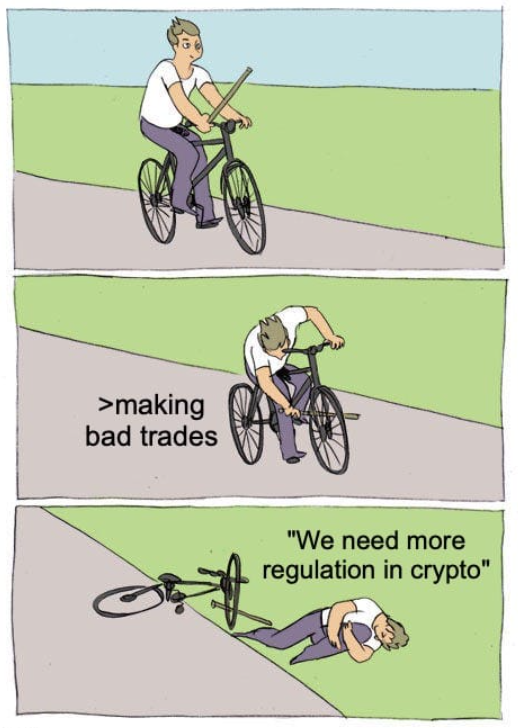
Meme Time
A Matter of Opinion
This week’s stories point to a simple reality: crypto is no longer just about innovation. From custody mishaps and security breaches to identity upgrades and sovereign infrastructure, the conversation is shifting toward how these systems actually operate in the real world. Reliability, governance, and user protection are becoming just as important as decentralization itself.
What stands out is how different parts of the ecosystem are maturing at the same time. Governments are experimenting with mining and national subnets, developers are rethinking identity through passkeys, and regulators are drawing clearer boundaries around digital assets. These changes may feel incremental, but they reflect a broader move toward infrastructure that people can trust and use daily.
The next phase of crypto may be less about disruption and more about durability. As tools improve and responsibilities become clearer, the real progress lies in building systems that work quietly in the background - secure, resilient, and accessible to people who don’t need to understand the technology to benefit from it.
Connect with Bitfinity Network
Bitfinity Wallet | Bitfinity Network | Twitter | Telegram | Discord | Github
*Important Disclaimer: The information provided on this website is for general informational purposes only and should not be considered financial or investment advice. While we strive for accuracy, Bitfinity makes no representations or warranties regarding the completeness, accuracy, or reliability of the content and is not responsible for any errors or omissions, or for any outcomes resulting from the use of this information. The content may include opinions and forward-looking statements that involve risks and uncertainties, and any reliance on this information is at your own risk.
External links are provided for convenience, and we recommend verifying information before taking any action. Bitfinity is not liable for any direct or indirect losses or damages arising from the use of this information.

Comments ()